Primary Flight Controls
The primary flight controls are the most fundamental control surfaces to control the aircraft. These are controlled by the stick/yoke and rudder pedals in the cockpit.
Elevator
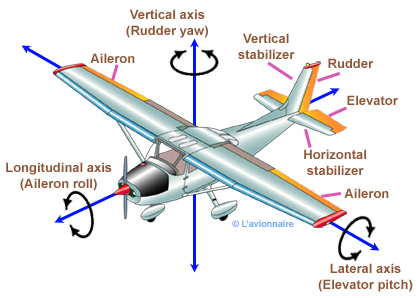
The elevator is the large horizontal surface at the back of the airplane that controls the attitude (pitch) of the aircraft. The elevator is usually connected to the control column by either wires or rods dependant on aircraft type. The elevator changes the attitude of the aircraft by creating an opposite force at the rear of the aircraft. For example, when the pilot wants the aircraft to pitch up the pilot moves the elevator to an up position, which creates a down force at the rear, causing the aircraft to rotate around its center of gravity, raising the nose.

Ailerons
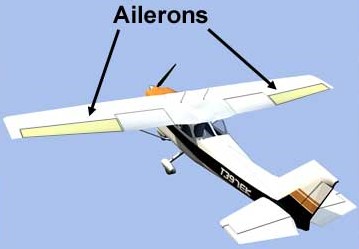
The ailerons are 2 surfaces, on the end of the trailing edge of each wing, that control the roll axis of the aircraft. The ailerons cause a roll by creating differential lift on each wing. For example, when entering a right bank the yoke/stick is moved to the right which makes the left aileron move down and the right aileron move up. This creates higher lift from the left wing and lower lift from the right wing, creating a rolling force on the aircraft, and vice versa.